
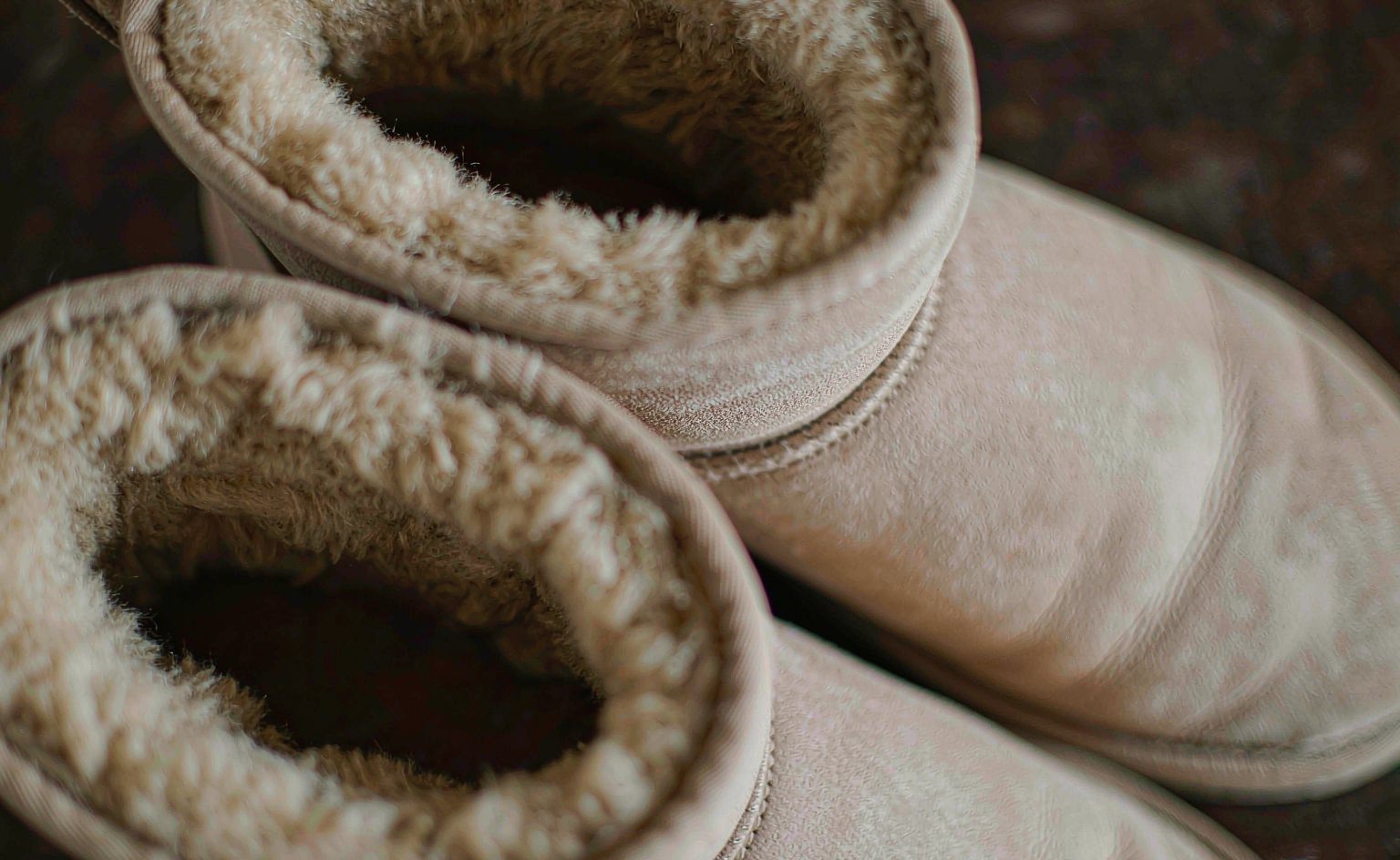
« Shearling, » « sheepskin, » « faux fur » — the labels get thrown around so loosely that most shoppers can’t tell what they’re actually buying. The difference matters: genuine sheepskin keeps your feet warm without sweating, lasts for years, and moulds to your foot. Synthetic copies often don’t. Here’s how to tell them apart in under a minute.
Why It Matters
- Warmth without sweat: real sheepskin is naturally thermoregulating — it traps warm air but wicks moisture, so feet stay dry. Synthetics trap heat and sweat.
- Durability: a genuine hide survives years of compression and rebounds; synthetic pile mats down and stays flat.
- Odour: real wool is naturally resistant to odour; synthetics hold smells.
- Fit: real sheepskin moulds to your foot over time (see our size guide). Synthetics don’t.
Real vs Synthetic at a Glance
| Check | Genuine Sheepskin | Synthetic / Faux |
|---|---|---|
| Backing | Wool grows from the leather; no separate base | Fur on a woven/synthetic backing; visible seam |
| Root | Roots embedded in the hide | Cut ends; uniform, too-perfect pile |
| Touch | Cool at first, warms slowly, breathable | Uniformly warm, slightly plasticky |
| Smell | Neutral, lanolin scent | Chemical / plastic odour |
| Price | Higher (real material cost) | Much lower |
| Burn test* | Smells like burning hair, self-extinguishes | Melts like plastic, acrid smell |
*Only as a last resort on a hidden, inconspicuous tuft — never on a finished pair you intend to wear or return.
What « Twin-Face » Means
Quality sheepskin boots use twin-face hides: the same piece of skin is both the suede exterior and the wool interior, untreated and joined in one. That’s why genuine pairs feel seamless inside. If the interior fur is a separate lining glued to a different outer material, it isn’t twin-face — and won’t breathe or mould the same way.
Caring for Real Sheepskin
Genuine sheepskin rewards care: brush the nap, spot-clean with a dedicated cleaner, and never machine-wash or tumble-dry (heat ruins the hide). Full steps in our Sheepskin Boot Care Guide.
Frequently Asked Questions
Is « shearling » the same as sheepskin? Shearling is sheepskin that’s been sheared to a uniform pile on one side and left as leather on the other — essentially the same material, finished differently. Both are real animal hide.
Can synthetic boots be good? They can be fine for light, occasional wear and a lower budget, but they won’t thermoregulate, mould to your foot, or last like real sheepskin.
Why does real sheepskin feel cool at first? Wool is a poor conductor, so it doesn’t immediately transfer your body heat back — it feels neutral, then warms to a stable temperature. Synthetics feel warm instantly because they just insulate.
Do all quality boots use twin-face? The best do. Cheaper « sheepskin-look » boots use a synthetic lining over a different outer — check the backing test above.
How do I clean real sheepskin? Brush dry, spot-clean with a suede/sheepskin cleaner, air-dry away from heat. Never machine-wash.
Shopping for the real thing? Our sheepskin boots collection uses genuine twin-face hides — and our care guide keeps them looking new for years.